How Confirmation Bias Shapes What We Call “Good” or “Bad” Art
Updated: Apr 14
What do we really see when we look at a piece of art? And more importantly—why do we see it that way? Art is famously subjective, yet we often talk about it as if certain works are objectively “beautiful,” “ugly,” “brilliant,” or “trash.” The truth is that much of what we believe about art isn’t about the artwork at all. It’s about us. One of the biggest psychological forces guiding our reactions to art is something we all carry, often without realising: confirmation bias.

What Is Confirmation Bias?
Oxford Dictionary defines confirmation bias as “the tendency to interpret new evidence as confirmation of one's existing beliefs or theories.” In other words, we filter the world—including art—through what we already think, know, and value. Science Direct explains it perfectly: when new information aligns with our beliefs, we gladly accept it. When it contradicts them, we instantly become more critical, spotting flaws we would have ignored otherwise. And we forget those uncomfortable facts quickly. This mental habit doesn’t just shape our opinions about politics or people. It deeply influences how we judge creative work.

Art History Is Full of Outrage (Fueled by Bias)
Much of what is now considered groundbreaking art was originally met with hostility or confusion:
Picasso’s Les Demoiselles d’Avignon
Manet’s Olympia
Warhol’s Campbell’s Soup Cans
At the time, critics insisted these artists were violating the “rules” of art. But as Samuel McNerney wrote for Scientific American, what was actually happening was that these works sent people’s confirmation bias “haywire.” Even Impressionism—the movement that now fills calendars, mugs, and museum gift shops—was once mocked as unfinished and compared unfavourably to wallpaper. Our ideas about what art should look like were challenged, and many people rejected what didn’t fit their existing beliefs.

Protest, Provocation, and the Artist’s Intention
Art that challenges norms often provokes the strongest reactions. Protest art, conceptual art, political art—they all tug at our deep-seated assumptions and values. But what did the artists themselves intend? That’s harder to know. Without the artist’s own narrative, viewers often fill in the gaps with—again—their own biases.
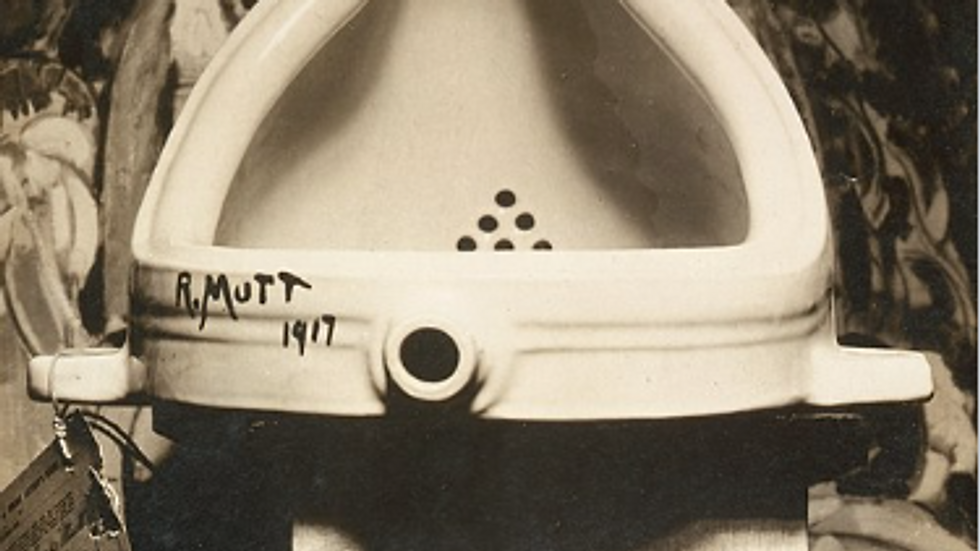
Duchamp’s Fountain: A Urinal That Changed Everything
Marcel Duchamp’s Fountain, a urinal signed “R. Mutt,” outraged the art world in 1917. His message was simple: art is anything you can get away with. Photographer Alfred Stieglitz described the piece as Duchamp taking an ordinary object and repositioning it to strip it of its original meaning. Without Duchamp, would we later accept Damien Hirst’s animals in formaldehyde or Tracey Emin’s unmade bed? Some found these works grotesque; others found them revolutionary. Again—same artwork, different viewer.
Lucian Freud and the “Uncomfortable” Human Body
Lucian Freud, one of Britain’s most influential painters, created Benefits Supervisor Sleeping, a raw and unfiltered portrait of model Sue Tilley. Far from idealising the human form, Freud painted every curve, fold, and contour with intense honesty. Christie’s describes the painting as a deeply evocative examination of the human body. Tilley herself has said that Freud’s aim was to test himself as a painter. But Freud admitted in a 2005 interview that he was always interested in extremes—not to create “freaks,” but to give ordinary people the intense attention that unusual subjects might receive. To some viewers, confirmation bias may frame the painting as uncomfortable or unattractive. To others, it’s a masterpiece of skill and human truth. Both reactions say more about the viewer than the painting.

What Psychology Tells Us
Confirmation bias has been studied for decades. In the 1960s, Peter Wason’s experiments showed that people tend to look for evidence that proves their assumptions while ignoring contradictory clues. Later psychologists expanded on this, defining confirmation bias as our tendency to favour information that supports what we already believe. If this affects our decision-making, it certainly affects how we interpret the aesthetics, meaning, and value of art.
Why Artists Should Care
If we aren’t aware of confirmation bias, we risk closing ourselves off from new ideas, new styles, and new artists. We may dismiss innovative work simply because it doesn’t match what we expect art to be. Understanding confirmation bias doesn’t just make us better viewers—it makes us better artists. It helps us see beyond our assumptions and recognise the value in work that challenges or unsettles us. Because sometimes, what we resist at first is exactly what pushes art forward.
Why Art Viewers Should Care
If confirmation bias shapes how we judge art, then being aware of it changes the entire experience of looking. When we recognise that our first reaction—“I love it” or “This is terrible”—may be rooted in habit rather than insight, we give ourselves the chance to look again. And that second look can be transformative.
Imagine encountering Les Demoiselles d’Avignon without knowing it hangs in the Museum of Modern Art. Would it feel revolutionary—or just strange? If we saw Olympia on Instagram without context, would we scroll past it? Context, reputation, and cultural approval heavily influence what we call “good.”
For viewers, this matters because art is one of the few spaces where we can actively practise intellectual humility. When we pause and ask, “What am I bringing to this?” we open ourselves to surprise. We might discover that discomfort isn’t a flaw in the artwork—it’s a signal that our expectations are being challenged.
Caring about confirmation bias doesn’t mean abandoning personal taste. It means refining it. It means choosing curiosity over reflex. And in doing so, we expand not only our understanding of art but our understanding of ourselves.
The Role of Art in Our Lives
Art serves as a mirror, reflecting not just the world around us but also our inner selves. It invites us to explore our emotions, beliefs, and biases. When we engage with art, we engage with our humanity. This connection can be profound, leading to self-discovery and growth.
Conclusion: Embracing the Challenge
In conclusion, understanding confirmation bias is crucial for both artists and viewers. It encourages us to challenge our perceptions and embrace the discomfort that often accompanies new ideas. By doing so, we not only enrich our experience of art but also foster a deeper connection with ourselves and the world around us. So, the next time you encounter a piece of art that stirs something within you, take a moment to reflect. What biases are you bringing to the table? What might you discover if you look a little deeper?
And remember, art is not just about what we see; it’s about how we see it. Let's keep our minds open and our hearts curious. After all, that’s where the magic happens.
---wix---



Comments